脑部放疗,上午比下午敏感许多!
3 c2 N& B- s$ @, ]
2 {, u4 n$ [1 ^1 b) v' Q
* e8 I" E2 e3 s0 s6 h$ cCancer 2011 Jan 15;117(2):414-20. doi: 10.1002/cncr.25423. Epub 2010 Sep 9.
6 `$ G# ?+ E S: l' P( G8 AGamma knife radiosurgery for brain metastasis of nonsmall cell lung cancer: is there a difference in outcome between morning and afternoon treatment?* d3 @# z8 s1 U: b( e, a$ {
Rahn DA 3rd, Ray DK, Schlesinger DJ, Steiner L, Sheehan JP, O'Quigley JM, Rich T.' J1 [- o4 t5 g" D1 Z4 n; o1 }
SourceDepartment of Radiation Oncology, University of Virginia Health Sciences Center, Charlottesville, Virginia 22908, USA.
+ i1 C/ E2 \+ z+ G/ J7 b+ I: b( Z( _! B% S
Abstract7 u3 I T% B/ X0 j" B. j
BACKGROUND: Circadian cell-cycle progression causes fluctuating radiosensitivity in many tissues, which could affect clinical outcomes. The purpose of this study was to determine whether outcomes of single-session gamma knife radiosurgery (GKRS) for metastatic nonsmall cell lung cancer (NSCLC) differ based on treatment time.$ u% r- S7 T4 o8 v& f3 v, o3 B7 l
+ C, Z0 X: I5 p# T" S& n) G0 _
METHODS: Fifty-eight patients received GKRS between 10:00 am and 12:30 pm and 39 patients received GKRS between 12:30 pm and 3:00 pm. The mean peripheral dose was 18.6 Gy. The mean tumor size was 7.3 cm³. Magnetic resonance imaging was used to score local control at 3 months. Cause of death (COD) was categorized as central nervous system (CNS)-related or systemic.
. s. \6 \1 U6 d3 x* G. v% ?# A" c6 C6 I) M3 i
RESULTS: Demographic and disease characteristics of the 2 groups were similar. Local control at 3 months was achieved in 97% (35/36) of patients who underwent GKRS early in the day versus 67% (8/12) of patients who underwent GKRS later in the day (chi-square, P = .014). Early GKRS was associated with better survival (median 9.5 months) than late GKRS (median 5 months) (Kaplan-Meier log-rank test, P = .025). Factors contributing to better survival in a Cox regression model included early treatment time (P = .004) and recursive partition analysis class (P < .001). Cause of death in the early treatment group was CNS-related in 6% (3/47) of patients versus 24% (8/34) of patients in the late treatment group (chi-square test, P = .026).
; e' S3 G$ {7 {) y+ {5 N* {! w( \* y
9 O. C R/ q4 cCONCLUSIONS: GKRS for metastatic NSCLC had better local control, better survival, and a lower rate of CNS-related cause of death when given earlier in the day versus later in the day. These retrospective data should encourage future study in brain radiosurgery and non-CNS stereotactic body radiotherapy series.% i5 n1 s0 Z! v s1 b
& }0 I1 t2 R- b1 X- Z9 \
|
 汇总4月最新:临床试验招募| 小细胞
"化疗±免疫后进展了,还能怎么办?"——这是许多小细胞肺癌患者和家属的困境。
临
汇总4月最新:临床试验招募| 小细胞
"化疗±免疫后进展了,还能怎么办?"——这是许多小细胞肺癌患者和家属的困境。
临
 母亲肺腺癌晚期骨转移,EGFR21突变,
母亲1970年出生,56周岁,身高163cm,体重98kg(196斤)。2025年9月23日肺炎住院,胸
母亲肺腺癌晚期骨转移,EGFR21突变,
母亲1970年出生,56周岁,身高163cm,体重98kg(196斤)。2025年9月23日肺炎住院,胸
 肺癌术后五年,脑膜转移治疗三年,伏
2025年8月14日更新: 终于输液港血培养结果为阴性了,14天美平消炎出院了,昨天开始双
肺癌术后五年,脑膜转移治疗三年,伏
2025年8月14日更新: 终于输液港血培养结果为阴性了,14天美平消炎出院了,昨天开始双
 从6个月到1400多天:一位晚期肺癌患
2026年全国肿瘤防治宣传周(4月15日-21日)即将到来,今年中国抗癌协会的主题是“肿瘤
从6个月到1400多天:一位晚期肺癌患
2026年全国肿瘤防治宣传周(4月15日-21日)即将到来,今年中国抗癌协会的主题是“肿瘤
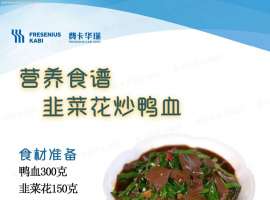 补血食谱—鸭血二菜
血红蛋白低,需补铁补血,鸭血中含有丰富的血红素铁,相对植物性食物中的铁,吸收利用
补血食谱—鸭血二菜
血红蛋白低,需补铁补血,鸭血中含有丰富的血红素铁,相对植物性食物中的铁,吸收利用
 11011102001537 )






 显身卡
显身卡